
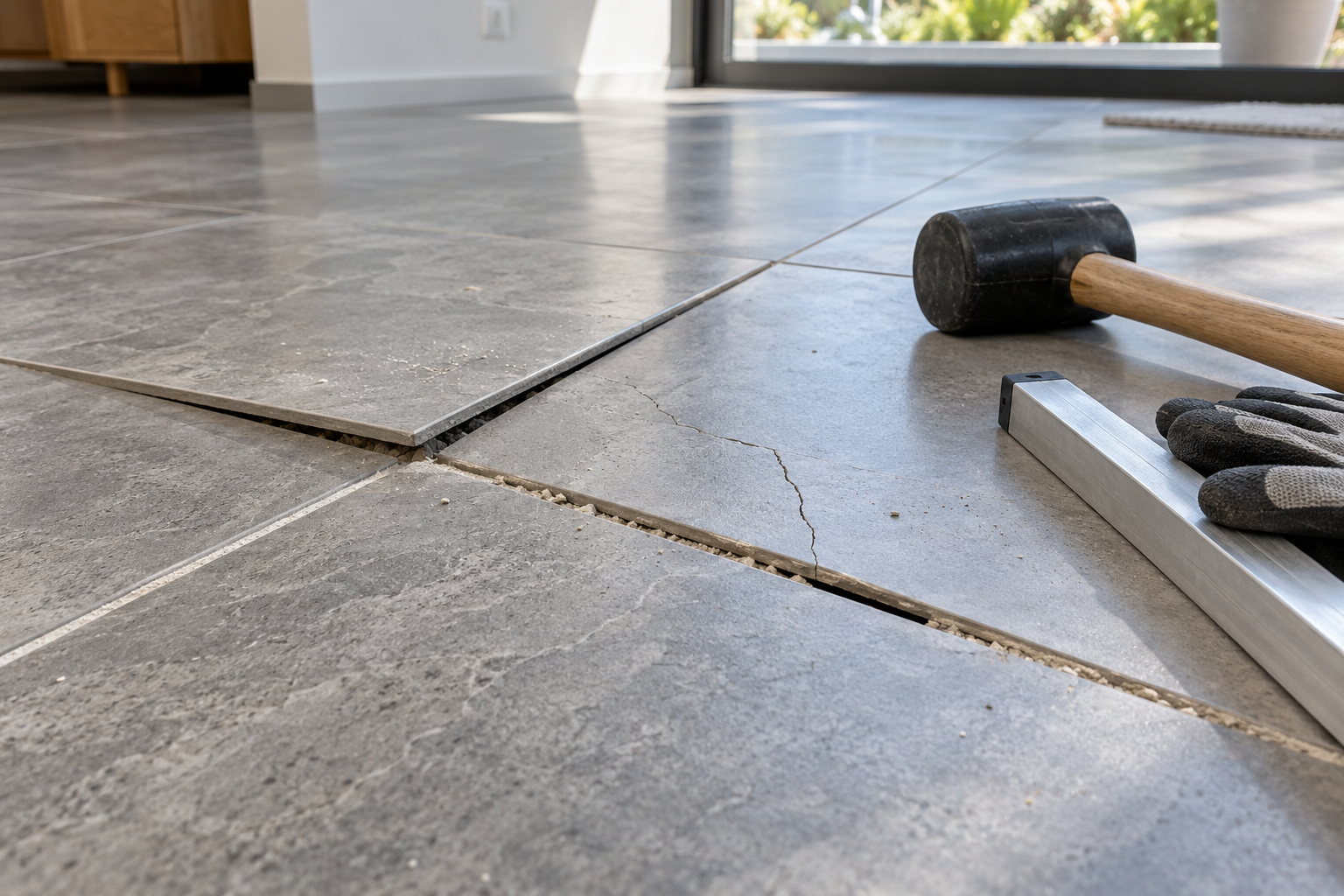
Tiles are designed to provide a durable surface, but problems can sometimes appear after years of use.
You may notice a cracked tile in the kitchen, hear a hollow sound when tapping the floor or discover that several tiles have started lifting.
These issues do not always mean that the entire floor needs to be replaced. The appropriate solution depends on the type of damage, how widespread it is and what is happening underneath the tiled surface.
Here are some common tile problems and what homeowners in Singapore should consider before arranging repairs.
What Are Popping Tiles?
Tile popping happens when a tile lifts or separates from the surface below it.
In some cases, one corner may rise slightly. In more serious cases, several tiles may lift together or become completely detached.
Once a tile begins moving, walking over the area may cause further damage to the tile or neighbouring sections. It is therefore better to have the area inspected rather than simply pushing the tile back into position.
What Are Hollow Tiles?
A hollow tile is usually identified by the sound it produces when tapped.
Instead of a more solid sound, part of the tile may sound empty or noticeably different from nearby sections.
A hollow sound can indicate that there is a space between the tile and the surface underneath. However, the presence of one hollow-sounding area does not automatically mean that the entire floor has failed. The location and extent of the hollow areas should be assessed.
What Causes Tiles to Become Hollow?
There can be several reasons. These may include:
- Insufficient bonding
- Uneven adhesive coverage
- Movement between surfaces
- Poor surface preparation
- Existing floor problems
- Ageing installation
The exact cause cannot always be identified simply by looking at the top of the tile. If hollow areas are widespread or tiles have started moving, further inspection may be required.
Why Do Floor Tiles Pop?
Tile popping can occur when the tile loses its bond with the surface underneath.
Possible contributing factors may include changes or movement within the tiled area, installation conditions or problems with the underlying surface.
The important point is that replacing the visible tile alone may not always solve the issue. If several surrounding tiles are also hollow or unstable, the affected area may be larger than it first appears.
What Causes Cracked Tiles?
A cracked tile can have a relatively simple cause. For example, a heavy object may have been dropped onto the floor.
However, cracks can also appear when there is movement or unevenness beneath the tile.
Consider the pattern of the damage. A single impact crack in one tile is different from a line of cracks extending across several tiles. When several tiles crack along the same path, the contractor may need to inspect the surface underneath before replacing them.
Can One Damaged Tile Be Replaced?
Yes, individual tile replacement may be possible. This is often suitable when:
- Only one or two tiles are damaged
- Surrounding tiles remain stable
- The underlying surface is in acceptable condition
- Matching replacement tiles are available
The damaged tile can be carefully removed before the area is cleaned and prepared for the replacement.
One common challenge is finding the same tile design. Tile ranges can change over time, and an older tile may no longer be available. For this reason, keeping several spare tiles after the original renovation can be useful for future repairs.
What If the Replacement Tile Does Not Match?
If an exact replacement cannot be found, several options may be considered.
You could use the closest available tile, introduce a deliberate contrasting design or replace a slightly larger section. The best approach depends on the location.
A small difference may be less noticeable in a utility area than in the centre of a large living room. For highly visible areas, homeowners sometimes choose to replace more tiles to achieve a consistent appearance.
When Is a Larger Tile Replacement Needed?
Replacing a single tile may not be enough when damage is widespread. A larger repair may need to be considered if:
- Many tiles are hollow
- Several tiles are lifting
- Cracks affect multiple tiles
- The floor is visibly uneven
- Tiles continue to loosen after previous repairs
In this situation, the contractor may recommend removing part of the tiled area so that the surface underneath can be assessed and prepared.
Should All Hollow Tiles Be Replaced Immediately?
Not every hollow-sounding tile will necessarily require immediate replacement.
The contractor should consider factors such as:
- Whether the tile is moving
- Whether grout joints are cracking
- Whether the hollow area is expanding
- Whether neighbouring tiles are affected
- Where the tile is located
A tile that is already loose or lifting generally requires more attention than one that remains stable. The condition of the overall floor should guide the decision.
What About Cracked Grout?
Sometimes the tiles themselves remain intact while the grout between them becomes damaged.
Grout can become cracked, discoloured, worn or missing in sections.
If the tiles remain secure, re-grouting may improve the appearance and restore the joints without replacing the tiled surface. However, repeatedly cracking grout may also indicate movement. If the same joint continues to crack after repair, the surrounding tiles should be inspected.
Re-Grouting vs Tile Replacement
These are two different types of repair.
Re-grouting focuses on the joints between tiles. Tile replacement involves removing and installing one or more tiles.
Re-grouting may be suitable when the tiles are secure but the grout has deteriorated. Tile replacement may be more appropriate when tiles themselves are broken, loose or damaged. A contractor can inspect both the grout and tiled surface before recommending the scope of work.
Can New Tiles Be Installed Over Damaged Tiles?
Tile overlay may be an option in some renovation projects, but damaged tiles must still be considered.
Overlaying over a surface with widespread loose or unstable tiles can leave the new installation dependent on an unreliable base.
Before overlaying, the existing floor should be checked for:
- Stability
- Hollow areas
- Cracks
- Uneven sections
- Loose tiles
- Floor-height limitations
The suitability of overlay depends on the actual site condition.
Tile Problems in Bathrooms
Loose or cracked tiles in bathrooms require additional attention because bathrooms are wet areas.
Besides checking the tiles, the contractor may need to consider:
- Floor drainage
- Floor traps
- Existing slopes
- Wall-floor joints
- Surface condition
- Waterproofing considerations
If extensive hacking is required, the complete renovation method should be discussed before work begins.
Tile Problems in Older Homes
Older tiled floors may have been installed many years ago using different materials and methods.
If several problems begin appearing at the same time, isolated repairs may become less practical. For example, replacing one tile today and another nearby tile several months later may indicate that a larger section needs attention.
An inspection can help determine whether localised repair remains worthwhile.
How to Check Your Tiles
You do not need specialist equipment to notice common warning signs. Look out for:
- Tiles that move underfoot
- Raised corners
- New cracks
- Broken grout lines
- Different sounds when tapping tiles
- Gaps forming between tiles
- Tiles separating from walls
- Sections that appear uneven
Take photographs when you first notice the problem. This can help you determine whether the affected area is changing over time.
Repair Early Before the Damage Spreads
A single damaged tile is usually easier to deal with than a large area of loose flooring.
If you notice popping, hollow, loose or cracked tiles, avoid waiting until several neighbouring tiles are affected.
Have the area inspected so you can understand whether the issue can be repaired locally or whether a larger tile replacement is more appropriate.
Top Construction provides tile installation, tile replacement, re-grouting, tile overlay, cement screeding and other related tiling works in Singapore.
An on-site assessment can help determine the condition of the affected area and the appropriate repair method before work begins.
Tile Repair FAQs for Singapore Homes
What should homeowners know about floor tile repair?
For floor tiles repair, start by checking whether the damage affects one tile or a wider area. A stable base and available matching tiles may make a local repair practical. Floor tiles replacement is more appropriate when many tiles are loose, cracked, lifting or hollow, because replacing only the visible damage may leave unstable sections underneath.
Why do HDB tiles pop or become hollow?
HDB tiles popping can be linked to lost adhesion, incomplete adhesive coverage, movement, ageing materials or problems with the original surface preparation. The pattern matters. One loose tile may need a small repair, while several raised or hollow tiles can justify opening a larger section to inspect the base. An on-site check is the safest way to decide whether local repair or HDB tiles replacement is suitable.
When is regrouting better than replacing tiles?
Regrouting tiles can help when the tiles remain firmly bonded but grout joints are cracked, stained, worn or missing. Regrouting does not correct movement below a loose tile. If fresh grout repeatedly cracks or gaps return, ask the contractor to check the surrounding tiles and substrate before recommending another cosmetic repair.
What should a tile replacement service include?
A tile replacement service should explain tile removal, debris disposal, surface preparation, adhesive, grout, cutting, replacement materials and final cleaning. Ask whether matching tiles are available and whether a larger area may need work if damage spreads during removal. A written scope makes quotations easier to compare.
How is a tile repair Singapore price calculated?
A tile repair Singapore price depends on the number and size of affected tiles, access, matching materials, hacking, disposal, substrate repairs, waterproofing and whether the work is in a wet area. A site assessment is usually more reliable than a price based only on photographs because hollow or unstable areas may extend beyond the visible damage.
Concerned about damaged tiles?
Arrange a site assessment so we can inspect the affected area and recommend the appropriate repair.