
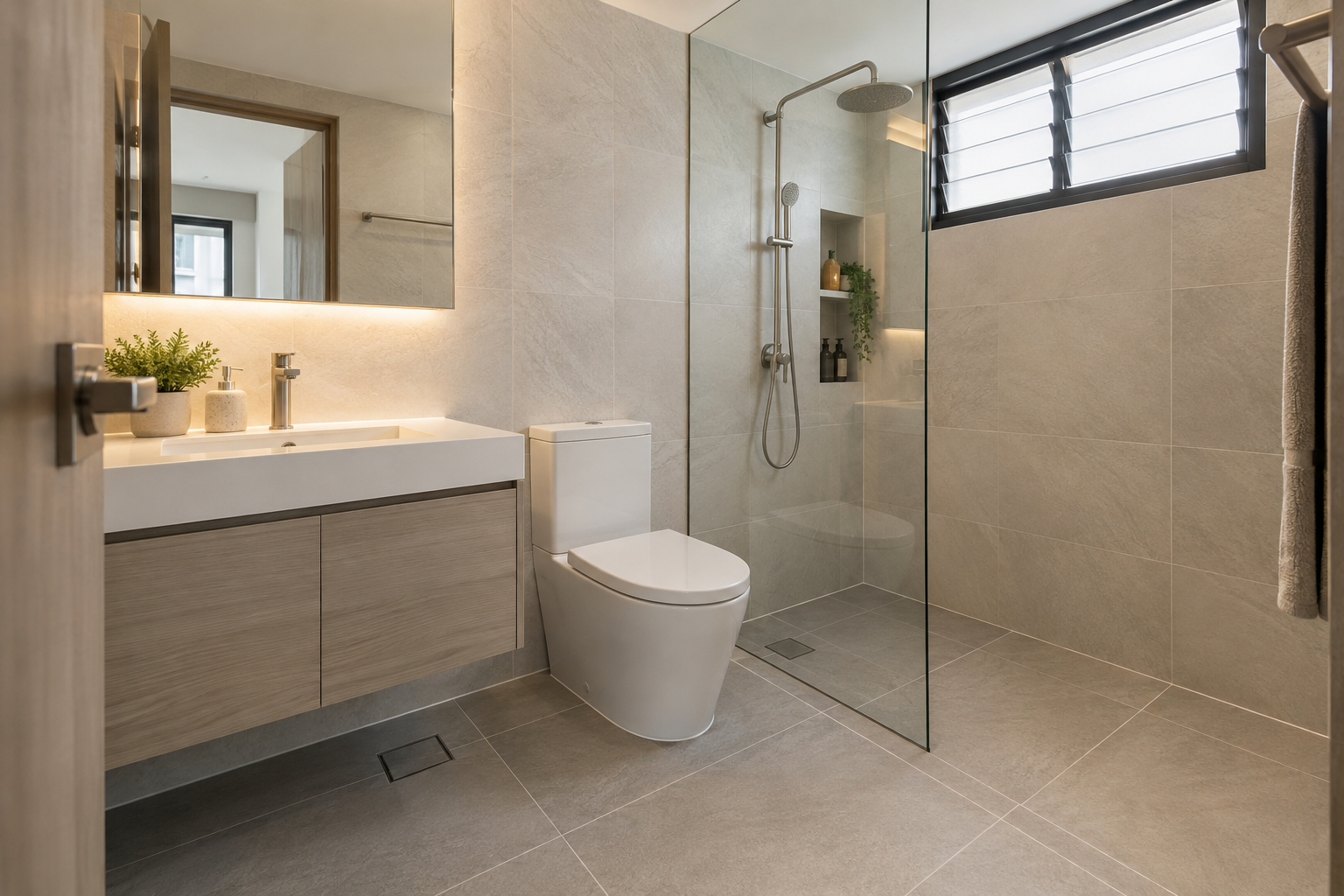
A toilet renovation can completely improve the appearance and usability of a home, but there is more to the process than selecting new tiles and sanitary fittings.
For many homes in Singapore, especially HDB flats, a toilet renovation may involve tile removal or overlay, waterproofing, floor screeding, wall and floor tiling, drainage considerations and careful planning around existing fixtures.
Understanding these areas before renovation starts can help homeowners plan the project more clearly and avoid unexpected issues during the work.
What Is Usually Included in a Toilet Renovation?
The exact scope of a toilet renovation depends on the condition of the existing bathroom and the changes you want to make.
Typical work may include:
- Removal of existing tiles
- Tile overlay
- Toilet floor tiling
- Wall tiling
- Waterproofing
- Cement screeding
- Floor levelling
- Replacement of sanitary fittings
- Grouting
- Repair of damaged surfaces
- Drainage adjustments
- Finishing work
Not every toilet renovation requires all of these steps.
A contractor should first inspect the existing bathroom before confirming what work is necessary.
Toilet Tiling
Tiles are one of the most visible parts of a bathroom renovation.
When choosing tiles, homeowners usually consider colour and design first, but the tile size, surface finish and installation method can also affect the final result.
Bathroom tiling may involve:
- Floor tiles
- Wall tiles
- Feature walls
- Shower areas
- Areas around sanitary fittings
- Floor traps and drainage points
The layout should be planned carefully because bathrooms normally contain more corners, pipes and fixtures than larger open areas such as living rooms.
This means toilet tiling often requires more detailed cutting and alignment.
Should You Hack or Overlay Existing Toilet Tiles?
One of the main decisions during a toilet renovation is whether the existing tiles should be removed or overlaid.
Tile Hacking
Hacking involves removing the existing tiles before the new surface is prepared.
This allows the contractor to inspect the area underneath the tiles and carry out any required repair, screeding or waterproofing work.
Hacking may be considered when:
- Existing tiles are loose
- Many tiles sound hollow
- Tiles are cracked
- The existing surface is uneven
- There are concerns about the condition underneath
- A major toilet renovation is being carried out
Toilet Tile Overlay
Tile overlay means installing new tiles over the existing tiled surface.
This may be suitable when the existing tiles are stable and the additional floor or wall thickness will not create problems.
Before toilet tiles are overlaid, the contractor should check:
- Existing tile stability
- Floor level
- Door clearance
- Floor trap height
- Drainage slope
- Wall transitions
- Existing sanitary fittings
Tile overlay can reduce hacking work, but it should only be used when the existing surface provides a suitable base.
Why Waterproofing Matters in a Toilet Renovation
Bathrooms are wet areas, so waterproofing is an important part of many renovation projects.
Water regularly reaches bathroom floors and shower areas.
If waterproofing is damaged or incorrectly applied, water may eventually affect surrounding materials or neighbouring areas.
Depending on the renovation scope, waterproofing may be applied before the final floor tiles are installed.
The area then needs to be prepared correctly before the next stage of work begins.
HDB Toilet Waterproofing
For HDB properties, bathroom renovation needs careful planning because toilets are often located directly above or beside other residential areas.
Homeowners carrying out substantial renovation work should ensure that the work follows the appropriate requirements and renovation procedures.
A toilet renovation contractor should also assess how the planned work affects the existing floor, waterproofing and drainage system.
What Is Cement Screeding in a Toilet?
Cement screeding can be used to prepare or adjust the floor before new tiles are installed.
In bathrooms, screeding is particularly important because the floor usually cannot be completely flat.
The floor needs an appropriate slope so water can flow toward the floor trap.
The contractor may use screeding to:
- Level uneven sections
- Prepare the surface for tiles
- Adjust floor height
- Create the required drainage slope
- Repair areas after hacking
The final floor level needs to work together with the entrance, shower area and drainage points.
Bathroom Floor Slope and Drainage
A bathroom floor needs to direct water toward the floor trap.
If the slope is insufficient, water may remain on parts of the floor after showering or cleaning.
During toilet floor tiling, the contractor needs to consider the position of the floor trap and the surrounding tile layout.
Large-format tiles may also require more careful planning around drainage areas because it can be more difficult to create slopes using very large individual tiles.
Toilet Floor Tiles
Bathroom floor tiles should be selected with the conditions of a wet area in mind.
Besides the overall appearance, homeowners may want to consider:
- Surface texture
- Ease of cleaning
- Tile size
- Grout lines
- Slip resistance
- Drainage layout
Very smooth surfaces may feel different when wet compared with more textured tile finishes.
It is useful to discuss the intended location of the tile with the contractor or tile supplier before making the final selection.
Bathroom Wall Tiles
Wall tiles can significantly change the overall appearance of a toilet.
Some homeowners tile every wall from floor to ceiling, while others may use different tile designs for selected areas.
Installation may require cutting around:
- Pipes
- Windows
- Electrical points
- Mirrors
- Basins
- Shower fittings
- Shelves or niches
A clear tile layout can help reduce awkward cuts and improve the overall finish.
Toilet Tile Overlay and Floor Height
Floor height is especially important when considering toilet tile overlay.
Adding another layer of tiles increases the height of the finished floor.
The contractor should check whether this affects:
- Bathroom doors
- Entrance thresholds
- Floor traps
- Shower kerbs
- Adjacent flooring
This is one of the reasons toilet tile overlay should be assessed on site rather than decided based only on appearance.
When Should Existing Toilet Tiles Be Replaced?
Tile replacement may be suitable when individual tiles are:
- Cracked
- Loose
- Chipped
- Popping
- Damaged
If only a small number of tiles are affected, localised replacement may be possible.
However, if many tiles are loose or hollow, a larger area may need to be inspected.
A widespread tile problem can indicate that the issue is not limited to the visible tile itself.
Re-Grouting During Toilet Renovation
Sometimes a bathroom does not require complete tile replacement.
If the tiles remain stable but the grout has become worn, stained or damaged, re-grouting may improve the tiled surface.
Re-grouting can be considered when:
- Grout has cracked
- Sections are missing
- Grout looks heavily worn
- The tile joints need refreshing
If the tiles themselves are loose, re-grouting alone will not solve the underlying problem.
What Affects Toilet Renovation Cost?
The cost of toilet renovation in Singapore varies depending on the scope of work.
Important factors can include:
- Bathroom size
- Hacking requirements
- Tile overlay
- Waterproofing
- Cement screeding
- Floor and wall tiling
- Tile size
- Tile material
- Sanitary fittings
- Plumbing changes
- Site condition
A straightforward tile refresh can involve a very different scope from a complete toilet renovation.
This is why homeowners should compare the actual work included in each quotation rather than looking only at the total price.
What Should You Ask a Toilet Renovation Contractor?
Before confirming the project, ask the contractor about the existing bathroom condition and the proposed work.
Useful questions include:
- Do the existing tiles need to be hacked?
- Is tile overlay suitable?
- Is waterproofing required?
- Does the floor need screeding?
- Will the floor height change?
- How will drainage be handled?
- Are existing tiles loose or hollow?
- What preparation is required before tiling?
- What work is included in the quotation?
A clear scope of work makes it easier to understand exactly what is being renovated.
Plan Your Toilet Renovation Around the Existing Condition
A good toilet renovation should address both appearance and the condition of the existing bathroom.
New tiles alone may not be enough if the floor underneath is uneven, damaged or unsuitable.
Before starting work, have the bathroom inspected so the contractor can determine whether hacking, tile overlay, waterproofing, screeding or other preparation is required.
Top Construction provides toilet tiling, bathroom tiling, tile overlay, waterproofing, cement screeding and related renovation works in Singapore.
An on-site assessment can help determine the appropriate renovation method for your existing toilet before work begins.
Planning a tiling or renovation project?
Arrange a site assessment so we can review the existing condition and prepare a clear quotation.